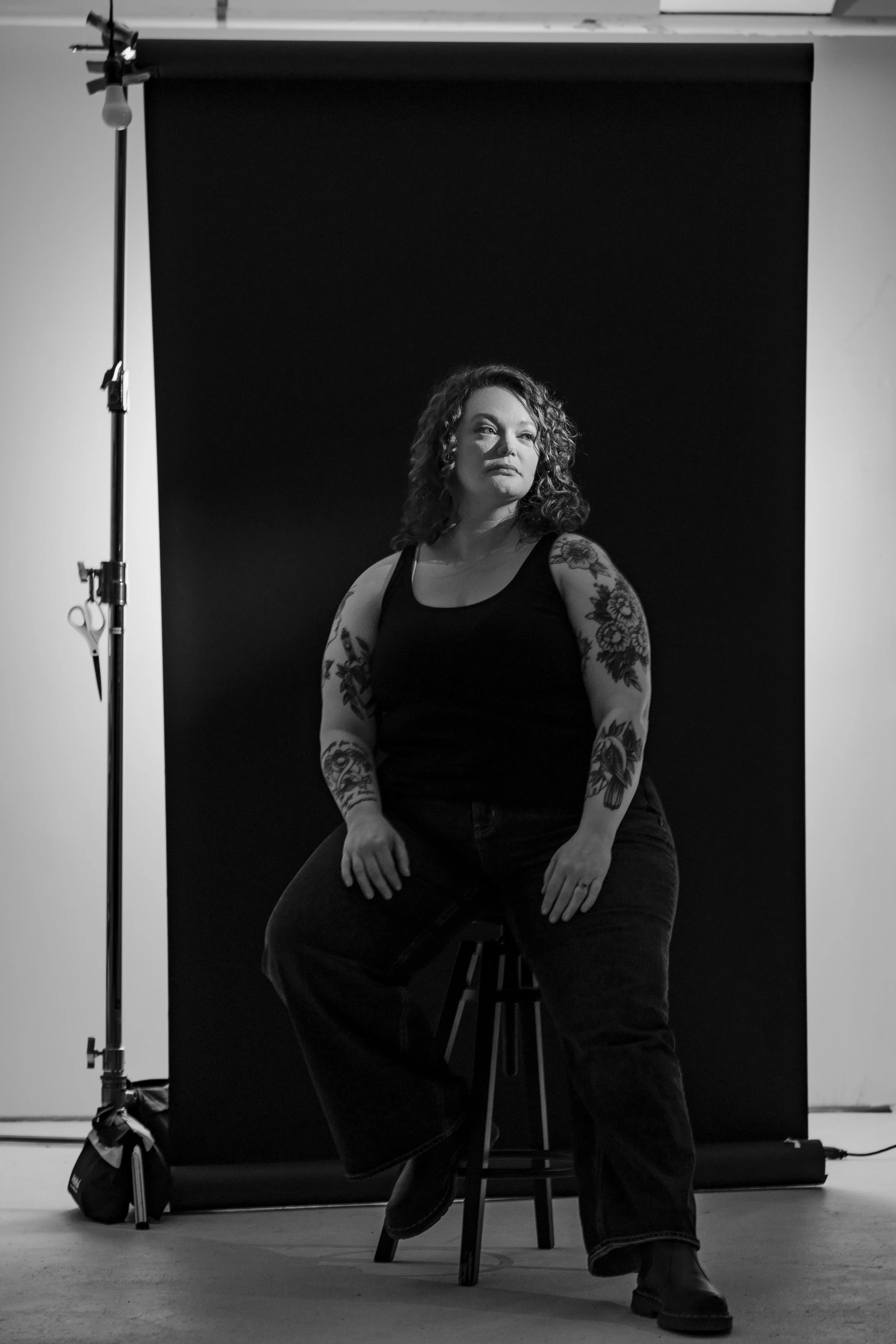
Willing to Try: How to Launch a Personal Portrait Project

If you’ve been hemming and hawing over a personal project, this one’s for you.
I’d guess you have the passion. What’s holding you back is the fear of doing it poorly. Somewhere along the way, many of us picked up the idea that not acting is safe and that doing something imperfectly is the real risk.
I think that’s backward.
Not doing the thing is the actual cost. Doing it poorly is just the first draft of doing it well.
Why bother?
I won’t tell you a personal project will land bigger clients or a bigger title.
It might, but early on I’d take that pressure off entirely. The real payoff is style, skill building, testing, and experimentation.
It’s growth in your creative work and growth as a person.
Organizing, designing, planning, and executing a project builds the skills you need to keep creating for the days, months, and years to come.
Here’s the process I use for portraits:
1. Start with an idea. Get inspired by someone else’s work. See something you want to replicate, try, or channel. You don’t have to invent anything.
2. Find your collaborator. For portraits, that’s a person you’re curious about (or even just a friend who is willing). Doing something together is powerful, and the people I work with on this kind of work often become my biggest advocates, which is huge if you are building a business.
3. Make a plan and put it on the calendar. “I’m going to photograph this person, here, on this day.” An idea without a date is a daydream.
4. Prepare, but don’t overwhelm yourself. It’s easy to collect inspiration like it’s a requirement, assuming more inputs mean a better output. But the best output is you doing the thing. I like to bring four or five ideas or concepts to a session instead of fourteen or fifteen, because everything takes longer than you expect, and if I am racing to accomplish everything, I’ll miss the moments when I really should slow down and play a bit more.
5. Execute, and expect it to be imperfect. If it’s your first time or you’re testing a new technique, it will take a while, and you might not get exactly what you pictured. You’ll still get something: knowledge you didn’t have, a technique that failed in an interesting way, a connection that formed. That’s the harvest.
6. Notice what you built. Don’t only grade the images against what you imagined. Ask what you learned, what you’d try differently, and who you now know that you didn’t before. These projects can become a sort of flywheel of their own.
Perfection isn’t a reasonable aim. You never arrive at a final location. It’s about process and practice, doing the work a little bit better each time.
So pick the idea. Text the person. Put it on the calendar.
You don’t have to be ready. You have to be willing to try.